
Waste to Wealth: Turning Waste into an Economic Resource
Written by: Nouval Agung Bima
Waste, a Neglected Resource
The waste problem remains an environmental challenge in Indonesia. Population growth, urban activities, and consumption patterns contribute to the increase in waste production. Based on data from the Ministry of Environment’s National Waste Management Information System (SIPSN), Indonesia’s waste generation is projected to reach approximately 28 million tons by 2025. East Java is the largest contributor with 5.29 million tons, followed by West Java with 3.79 million tons and Jakarta with 3.35 million tons. These figures demonstrate that the waste problem is not only related to cleanliness but also to resource management.
Source: Countroltek
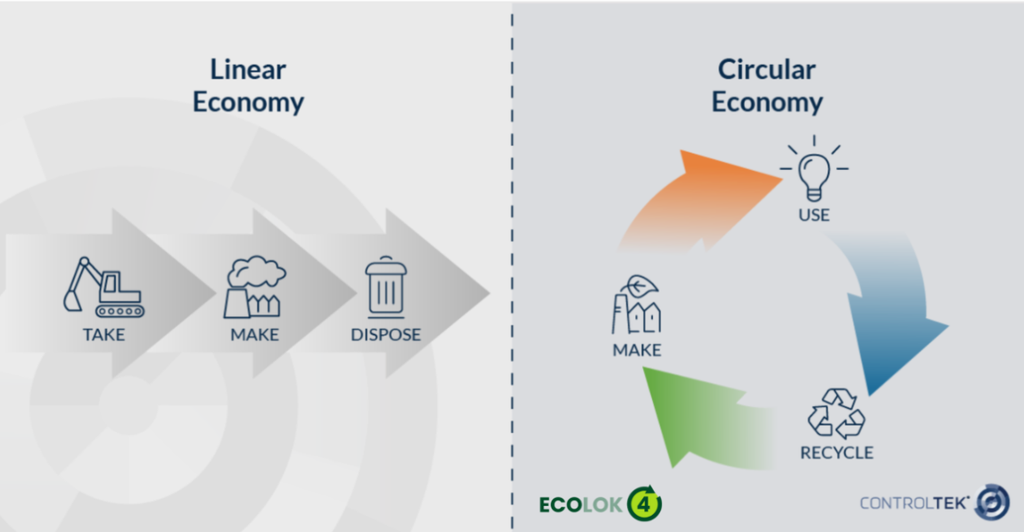
The problem is further complicated by the fact that waste management is still dominated by a collect, transport, and dispose pattern. As a result, various materials such as plastic, paper, glass, and metal that could actually be reused end up in landfills (TPA). This situation is related to the linear economic paradigm “take, make, dispose“. This is a pattern of production and consumption that begins with the extraction of natural resources, processing them into products, and finally disposal after use. In this pattern, the potential for materials to be reused is often overlooked, while waste generation continues to increase and risks environmental pollution.
Alternatively, the concept of a circular economy offers a different approach by preserving the value and useful life of resources for as long as possible. Through sorting, reuse, repair, and recycling, waste can be processed into raw materials or new products with economic value. Thus, waste is no longer viewed solely as waste to be disposed of, but as a resource with the potential to create added value and economic opportunities.
What is Waste to Wealth?
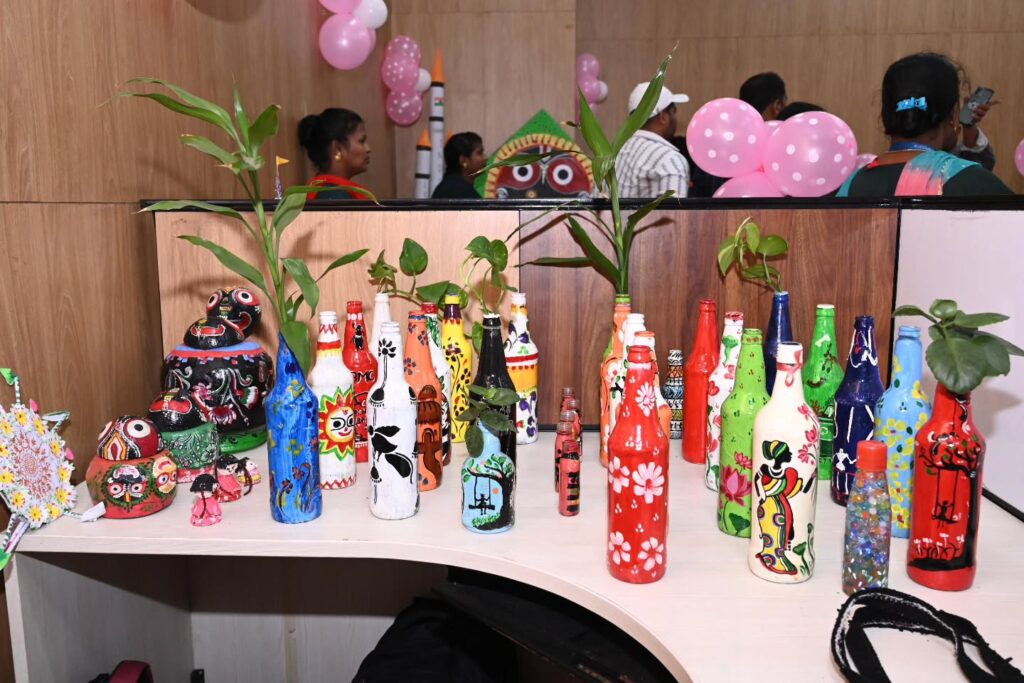
Waste to Wealth is an approach that views waste not simply as useless consumption waste, but as a resource that can still be utilized and generate economic value. This approach encourages a shift in perspective on waste through processing, reuse, and product innovation. Thus, waste management is not only oriented towards reducing environmental pollution but also opens up new economic opportunities for the community. One application can be found in the processing of used plastic bottles into craft products that have function, aesthetic value, and market potential.
The concept of Waste to Wealth has a close relationship with the circular economy (circular economy), an economic approach that seeks to maintain the utility value of materials for as long as possible so they don’t immediately end up as waste. In its application, materials previously considered worthless can be collected, sorted, and then processed into new products. For example, used plastic bottles can be used to make cutlery containers or other craft products. This process demonstrates that a material still has potential uses after its initial function has ended. Through this approach, the need for new raw materials can be reduced while extending the material’s useful life.
Conventional waste management generally focuses on collecting, transporting, and disposing of waste to a final processing facility. This approach places greater emphasis on handling waste after it is generated, without always considering the potential uses of the materials it contains. In contrast, the recycling approach Waste to Wealth strives to provide added value by processing waste into raw materials or new products. For example, used plastic bottles that were previously discarded can be processed into spoon and fork holders with specific designs and functions. These products not only reduce waste but also have the potential to be developed into valuable items. Thus, the fundamental difference lies in how waste is viewed: as something to be discarded or as a resource that can still be utilized.
Source: bmc.bbcr
Implementation of Waste to Wealth it doesn’t always have to start with large-scale industrial technology. Simple innovations through processing skills, design creativity, and the use of readily available equipment can also produce value-added products. For example, used plastic bottles can be cut, shaped, and decorated using simple tools to create functional craft products. However, on an industrial scale, the use of technology can be further developed through automated sorting, shredding, washing, and processing of materials into new raw materials. This demonstrates that innovation in waste management has ample scope for development, from community empowerment to the application of technology in industrial production processes.
Implementation of Waste to Wealth in Industry
Source: Liputan 6
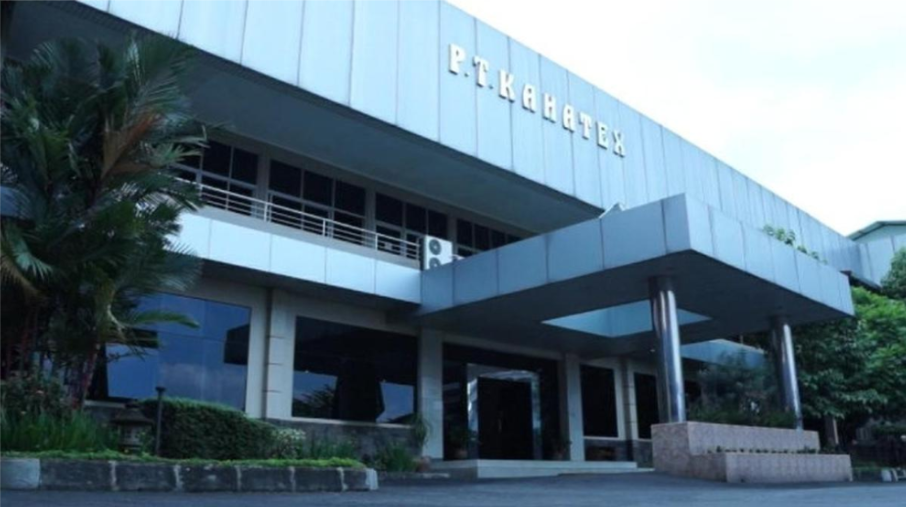
One example of the application of the concept Waste to Wealth on an industrial scale it can be seen at PT Kahatex, a textile company that utilizes mechanical recycling technology to process polyester-based waste (PET), such as textile production waste (post-industrial waste), plastic bottle fragments (bottle flakes), and film materials, into new textile raw materials. Since May 2022, Kahatex has operated a recycling facility with a capacity of approximately 25 tons per day. Through technology homogenization, polyester waste is processed to produce a homogeneous melt material, then processed intorecycled polyester chipswhich can be reused to produce textile yarns, such as POY and DTY. This practice demonstrates that waste does not have to end up as discarded material, but can be returned to the production chain as raw materials with economic value. Thus, the application of recycling technology at Kahatex is an example of industrial innovation in supporting a circular economy by reusing resources and reducing the need for new raw materials.
How Do Indonesian Regulations Govern Waste Utilization?
- Law Number 18 of 2008 concerning Waste Management
- Household waste management obligations
- The obligation of producers to manage packaging and/or goods they produce that are difficult or cannot be decomposed naturally.
- Government Regulation Number 22 of 2021 concerning the Implementation of Environmental Protection and Management
- Regulation of B3 and non-B3 waste management.
- Obligations to manage waste generated by industrial activities.
- Regulation of the Minister of Environment Number 19 of 2021 concerning Procedures for the Management of Non-Hazardous and Toxic Waste
- Reduction of non-B3 waste.
- Utilization of waste as raw material.
- Technical requirements for waste utilization.
Challenges of Implementing Waste to Wealth
- Limited Waste Processing Infrastructure
Implementation of waste to wealth is requires adequate sorting, collection, and recycling facilities. Limited infrastructure and technology can hinder the utilization of waste into economically valuable products or raw materials.
- Low Waste Sorting from Source
Mixed waste is difficult to process and requires additional sorting. Therefore, public awareness of waste sorting, from households, offices, and industrial areas, is a crucial factor in successful recycling.
- Limited Access to Financing for Recycling Businesses
Recycling businesses, particularly MSMEs, often face limited capital for equipment procurement, technology development, and product marketing. Financial support and business mentoring are needed to ensure sustainable recycling growth.
- The Less Than Optimal Collaboration Between Government, Producers, and the Community
Waste management requires the involvement of various parties. The government plays a role in providing regulations and facilities, producers are responsible for the impact of their products, and the community plays a role in reducing and sorting waste. Integrated collaboration is necessary to build a sustainable waste utilization chain.
Edited by: Anisa Khalilatuz Zahra
Bibliography
Journal
Chrismanta, Condo Leezza, et al., 2026, National Waste Emergency in Indonesia: Analysis of Waste Management and Its Impact on Environmental Pollution from the Perspective of Sustainable Development Goals, Presidesial: Journal of Law, State Administration, and Public Policy, Volume 3, Number 2, June, pp. 2-6, https://share.google/AIDsEPRG6BYEZpPwW
Malihah, Lola, and Siti Magfiroh, 2024, Circular Economy as the Antithesis of Linear Economy: A Review, STIEP Economic Journal (JES), Volume 9, Number 1, pp. 76-81, https://share.google/bNJxPdFmnwVQY0m7d
Rahmaningtyas, Wisudani, et al., 2025, Waste To Wealth: Eco-Craft Innovation as a Sustainable Solution, Praxis: Journal of Community Service, Volume 4, Number 1, September, pp. 69-79, https://share.google/SzGf9aNC8N79FNeLC
Picture